A leak over a warehouse ruins inventory. A leak over a cleanroom or a GMP suite in a Portland biotech building can ruin a batch, breach a controlled environment, and trigger regulatory notification, costs that make the roofing project itself a rounding error. That changes how the work has to be done. Pharmaceutical and laboratory roofing is not weatherproofing with extra paperwork; it is operating inside someone else's quality system, where every penetration sits above equipment that cannot get wet and every disruption to airflow has consequences. We plan these projects backward from what is under the deck.
Portland and its westside have a real concentration of this work. The OHSU campuses and the South Waterfront life-sciences cluster, the medical and research corridor along Marquam Hill, the analytical and environmental labs scattered through the Northwest Industrial District, and the clean-tech and semiconductor-adjacent operations out the Sunset corridor toward Hillsboro all run buildings with cleanrooms, fume-hood exhaust, and sensitive instrumentation under low-slope roofs. These are among the highest-value envelopes in the regional inventory, and they demand a contractor who treats the roof as part of a regulated facility rather than a standalone structure.
A crew that shows up to a pharmaceutical campus without pre-cleared credentials does not start work, they go home, and the day is lost. Active manufacturing and lab buildings carry facility access standards, security protocols, and in some cases controlled-substance restrictions that govern who is on the roof, when, and with what documentation. We start credentialing during preconstruction, typically two to three weeks ahead of mobilization, so background checks, escort arrangements, and access restrictions are settled before the crew arrives. The coordination plan names who is cleared, which areas require an escort, and which roof zones sit over restricted space.
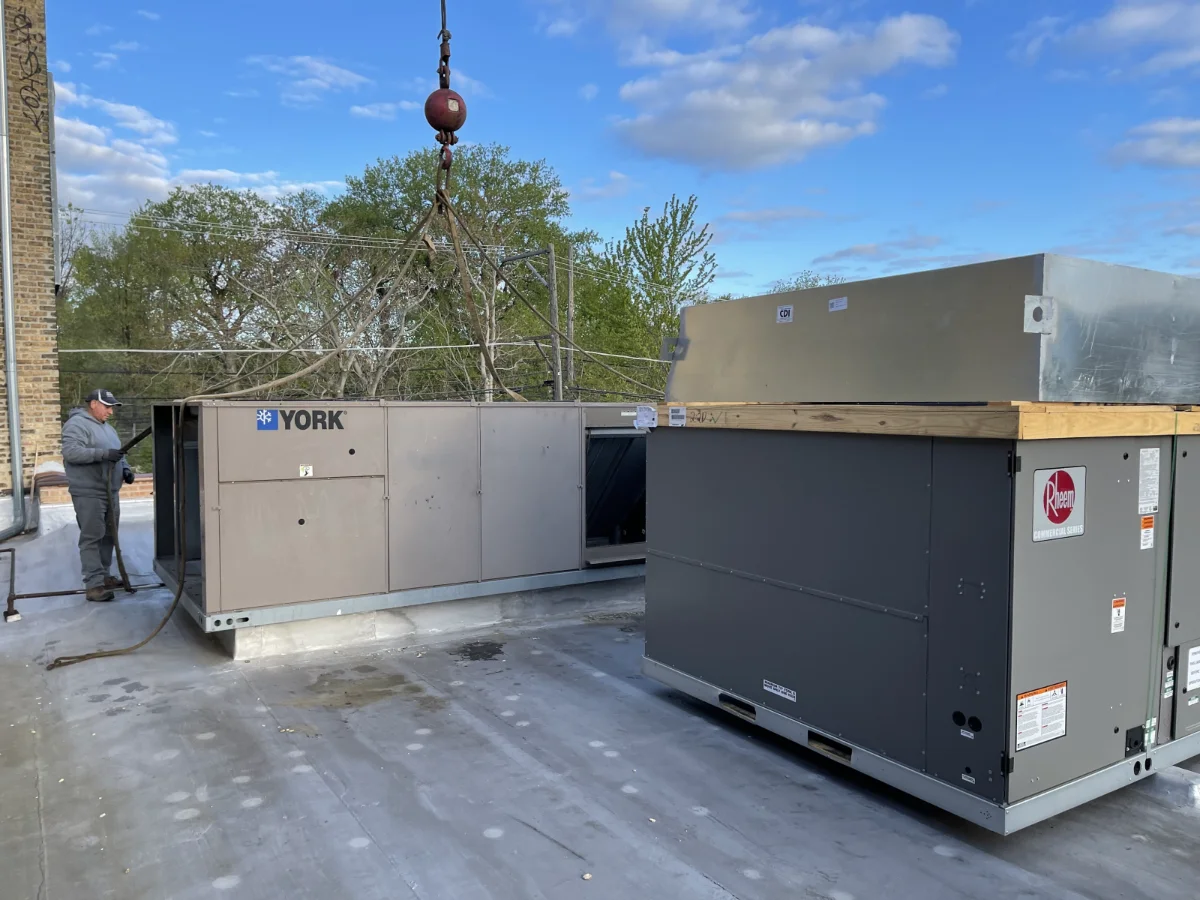
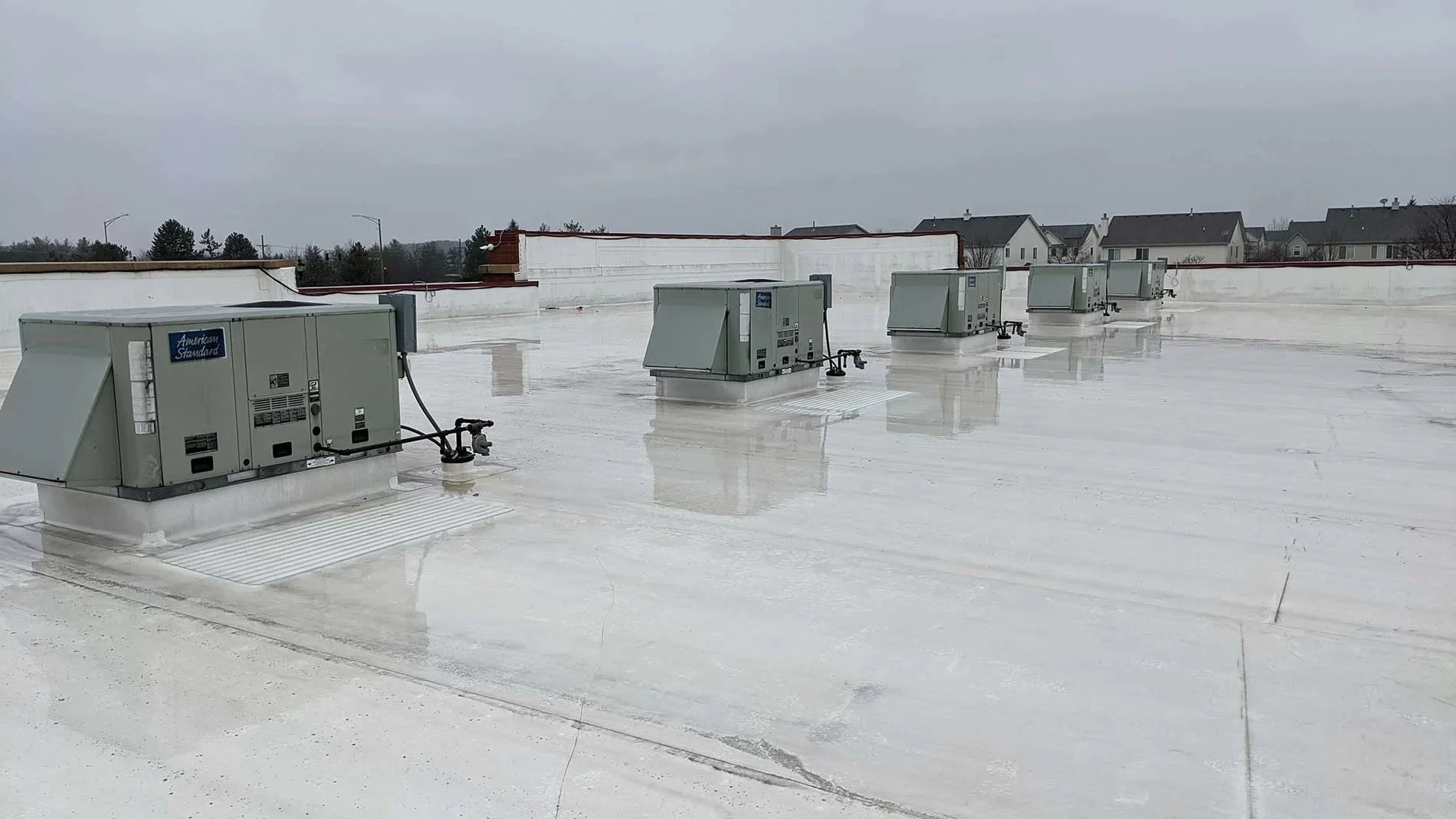
Lab and pharma roofs are some of the most crowded decks in commercial construction. A single building can carry dedicated cleanroom air handlers, fume-hood and solvent exhaust stacks, biosafety exhaust with HEPA housings, process chilled-water and gas lines, and building-automation conduit, all penetrating the membrane in tight clusters. Every one of those is an individual flashing detail and an individual documentation item. There is no template here; we inventory and photograph each penetration, flash it as its own assembly, and record it for closeout.
Cleanrooms hold their classification through carefully balanced pressure differentials. Any roof work near cleanroom supply or exhaust connections can disturb that balance, and disturbing it is not acceptable on an operating suite. We coordinate penetration work near critical HVAC with the facility's MEP team, schedule it into planned maintenance windows where possible, confirm pressure differentials recover afterward, and verify no dust or debris has entered the air path above the cleanroom envelope. The roofing schedule bends to the air balance, not the other way around.
Fume-hood and process exhaust on a lab roof carries solvents, acids, and other reactive vapors. Those streams condense on the exhaust stacks and drip back onto the membrane downwind, creating localized chemical attack that standard warranties do not cover and that a generic membrane simply cannot absorb. We identify the exhaust chemistry with the facility's MEP team before we specify anything, then check that chemistry against the manufacturer's chemical-resistance data. In practice that means 60-mil reinforced PVC across these roofs, with added attention in the fallout zone immediately around solvent and acid stacks. Standard TPO does not belong near reactive-vapor exhaust, and we will not put it there.
Portland's long wet season means a lab roof spends months under steady rain, and ponding water over a cleanroom or instrument bay is a risk no facility manager should carry. We design tapered insulation to move water positively to drains and scuppers, upsize or supplement drainage where the original design falls short, and detail overflow protection so a blocked primary drain never loads the deck over critical space. On these buildings, eliminating standing water is not a maintenance nicety, it is part of protecting what is underneath.
Closeout on a regulated facility is its own deliverable. Pharmaceutical and lab clients typically expect contractor qualification records, a site-specific safety plan, reviewed material submittals, daily work reports, manufacturer installation documentation, system certification where required, and warranty registration, assembled in a package their quality team can file and produce on demand. We work inside the facility's document-control process rather than handing over a folder and walking away.