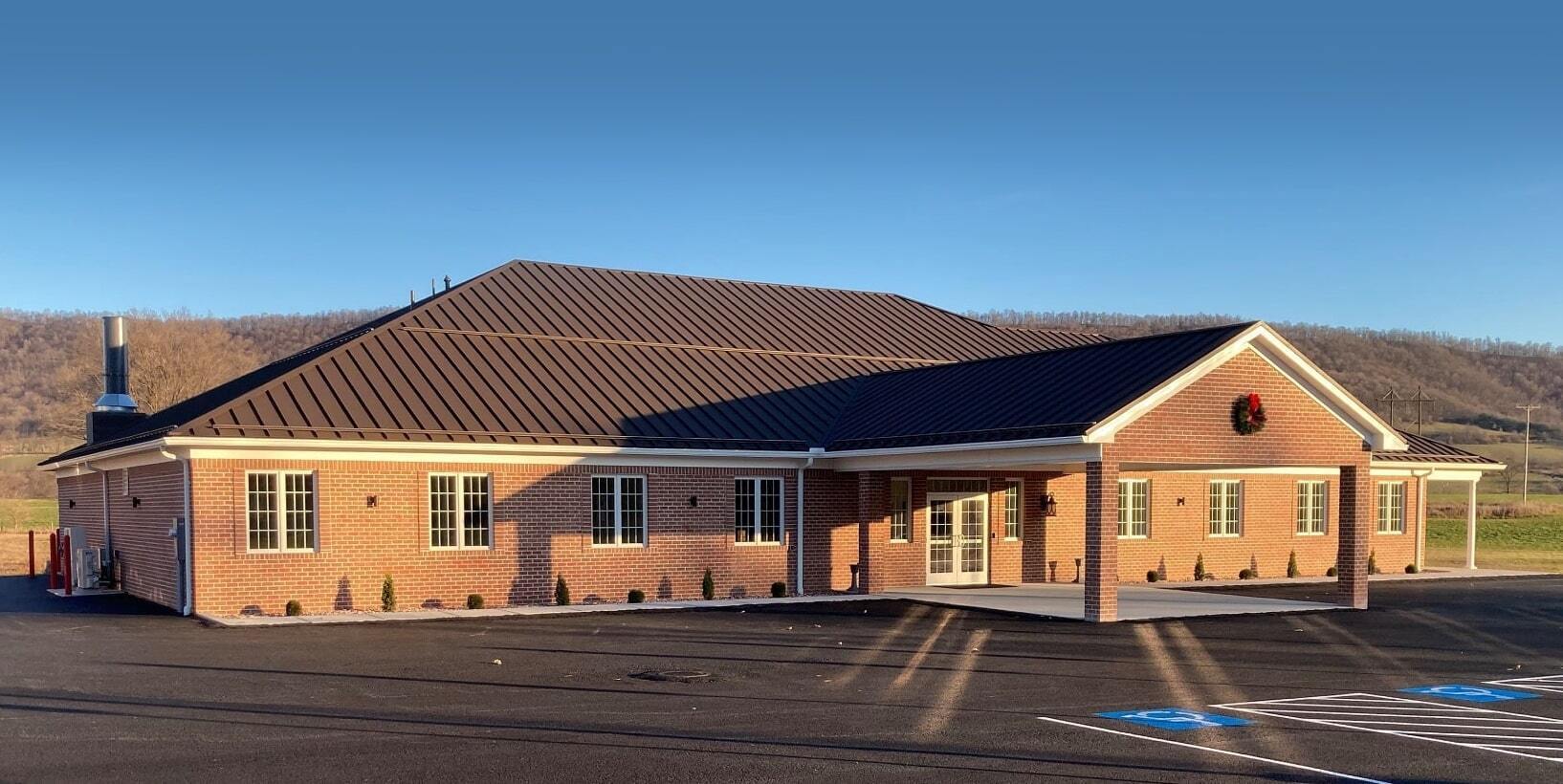
A funeral home is a building people remember in detail, often during the worst week of their lives. The roof's job is to disappear: no drips in the chapel, no buckets in a hallway, no scaffolding framing the front door when a family arrives for a viewing. We handle funeral home and mortuary roofs across Portland with that standard in mind, treating the schedule and the appearance of the property as part of the work rather than an inconvenience to be managed around. Many of the funeral homes we look at sit on long-held parcels along Sandy Boulevard, in the Hollywood and Montavilla areas off NE 82nd, and on the older arterials of inner Southeast and North Portland, where the buildings have been added onto over decades and the roof is rarely a single clean plane.
Funeral homes in this city tend to fall into two camps, and they call for different things from a contractor. The first is the established neighborhood mortuary, frequently a converted or expanded mid-century structure with a built-up roof over a wood or concrete deck, a pitched chapel addition, and a porte-cochere out front. The second is the larger regional or chain-operated facility with corporate facilities management, a formal vendor process, and an expectation of clean documentation at closeout. We work comfortably with both: the family director who wants to talk it through over coffee, and the asset manager who needs the warranty registered to the right entity and a roof plan for the file.
The defining constraint on this building type is that it is almost never closed. Visitations run into the evening most days of the week, services can be scheduled on short notice when a family needs them, and the preparation areas operate on a timeline set by death calls rather than by a construction calendar. We start every funeral home project by getting the director's schedule and building the work sequence around it. Tear-off and noisy demolition happen on open mornings well away from any service space, the front entrance and chapel stay clear and clean during visitation hours, and we confirm a watertight dry-in before the building closes for the evening.
Portland's weather makes that daily dry-in discipline non-negotiable. The long wet season from October through spring means an exposed deck left overnight is a flooded deck by morning, and the slow steady rain this city is known for finds every unsealed lap. We do not leave a funeral home open to weather, and we do not leave a tarp flapping over an occupied chapel. If the forecast turns, we button the roof up and come back, rather than gambling with a building that has a service the next day.
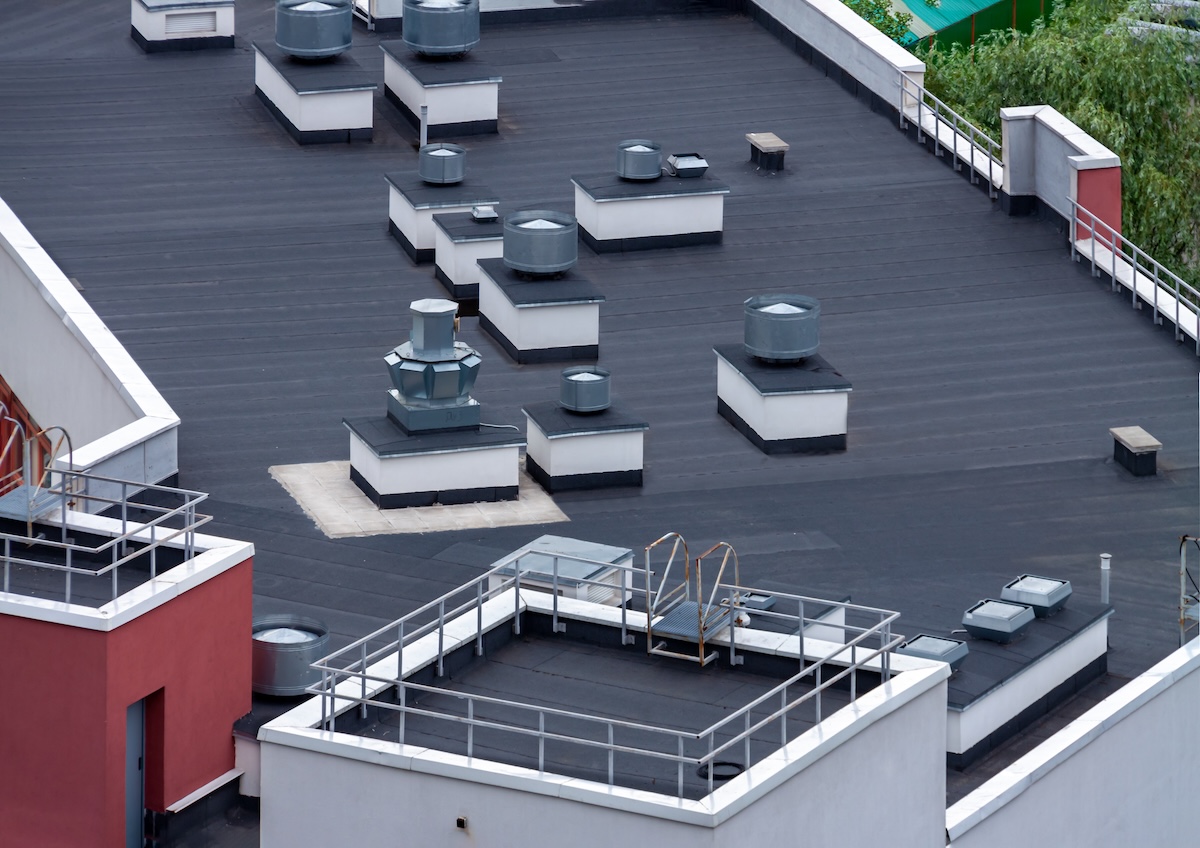
Every embalming and preparation room is held under negative pressure and vented through a dedicated rooftop exhaust stack to carry formaldehyde and other chemical vapors out of the space. That stack has to keep running. We locate it before we mobilize, treat the flashing around it as its own scope item rather than folding it into the field membrane, and coordinate any work within reach of it directly with the director so the exhaust is never blocked, capped, or shut off for our convenience. On older mortuaries we frequently find the original prep-room curb undersized or poorly flashed, which is both a leak risk and a warranty problem, and we raise and reflash it as part of the job.
The chapel is usually the structural challenge on the roof. These are clear-span rooms, often forty to sixty feet across without an intermediate column, and the deck and fastening pattern have to be specified for the wind uplift that geometry generates. Before we recommend a recover or a tear-off, we core the existing assembly and run a moisture survey, because a built-up roof that looks serviceable from the surface very often hides saturated insulation underneath, and recovering over wet board just buries the problem for a few years.
The porte-cochere is the other recurring trouble spot. That covered entry is where families step out of the car, so it is the most visible part of the building, and the transition where the canopy roof meets the main wall is one of the most common chronic leak sources we find on funeral homes. Thermal movement, undersized scuppers, and decades of patchwork at that joint add up. We evaluate the canopy drainage and the canopy-to-building flashing as discrete items on every inspection rather than assuming a new field membrane will solve a detail problem.
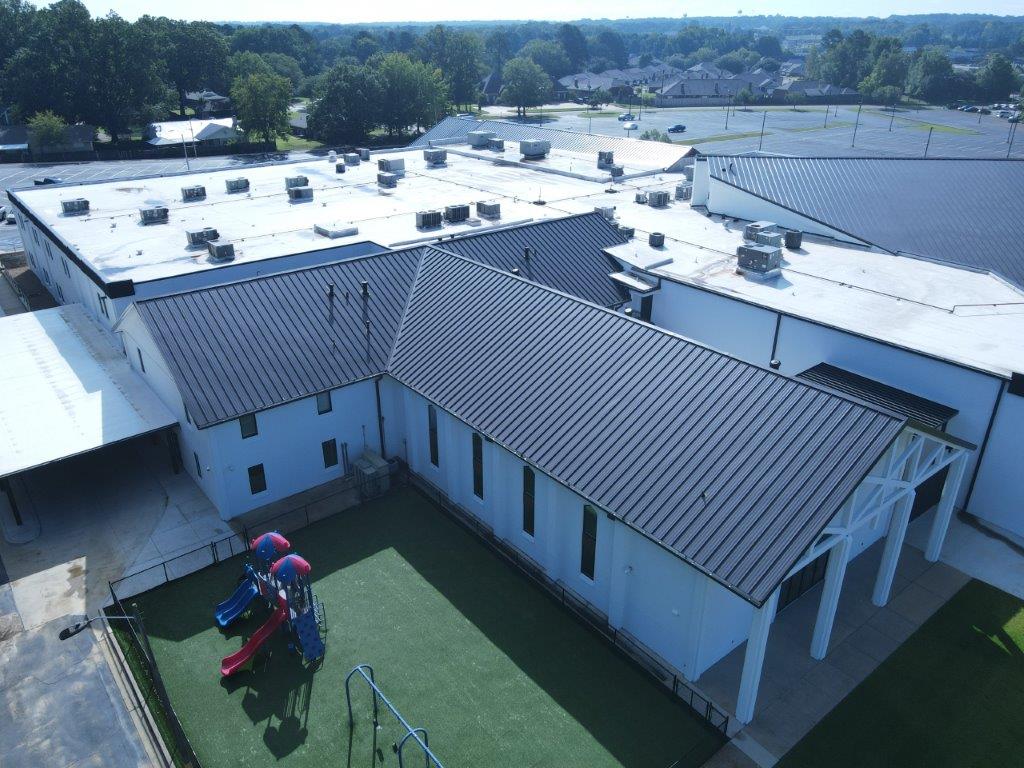
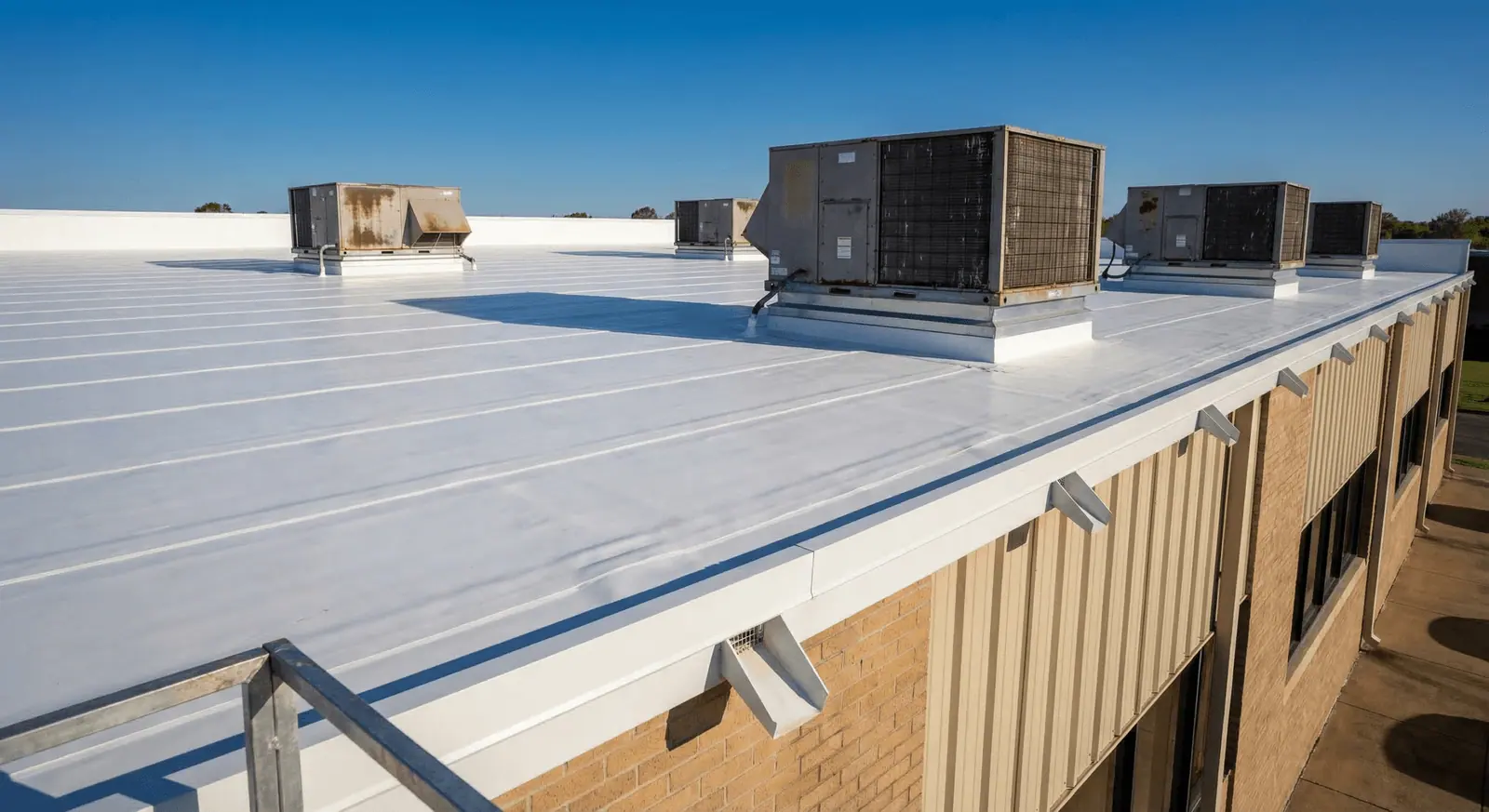
For the flat portions of a Portland funeral home, a 60-mil TPO over tapered polyiso is our typical recommendation. The tapered insulation corrects the drainage deficiencies that are nearly universal on older low-slope decks here and clears the ponding water that shortens membrane life in a climate that delivers rain in volume. Where a chapel or porte-cochere carries a visible pitched roof, standing seam metal often makes more sense for both longevity and the dignified, permanent look these buildings should project. On wood-decked additions we confirm load capacity and fastener pull-out before settling on insulation thickness and attachment.