Ice storms in the Portland metro are episodic rather than annual , the region has gone through damaging ice events in past winters that layered freezing rain over low-slope commercial roofs, parking structures, and rooftop equipment across the metro. Between events, ice is rarely a factor here, which is part of why the damage catches building owners off guard when it does happen: crews and property managers are not routinely inspecting for it the way they would in a market with a real snow season.
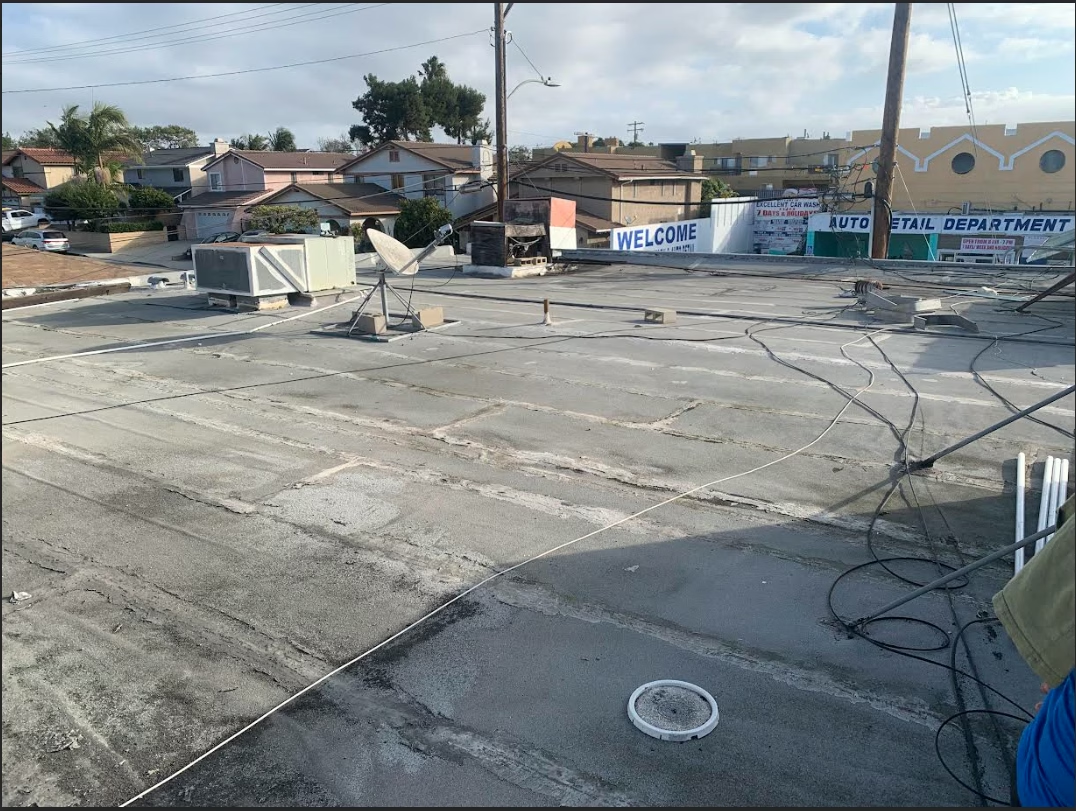
The mechanism on a low-slope commercial roof is different from a sloped residential roof. Ice does not usually build a classic dam at the eave the way it does on a pitched roof; instead, freezing rain accumulates on the field, at parapets, around rooftop units, and in drain bowls and scuppers, where it can block drainage entirely and load standing water and ice weight onto the membrane and the deck below it. Once drains are blocked by ice, any additional rain or melt has nowhere to go until the ice clears.
Weight is the first thing we check after an ice event, particularly on older built-up and modified bitumen roofs common on Central Eastside industrial buildings and older warehouse stock near the Columbia Corridor. Accumulated ice adds real dead load to a roof structure that was not designed with heavy snow or ice load in mind, and in isolated cases that load can show up as deck deflection or interior signs of stress before it shows up as a visible membrane failure.
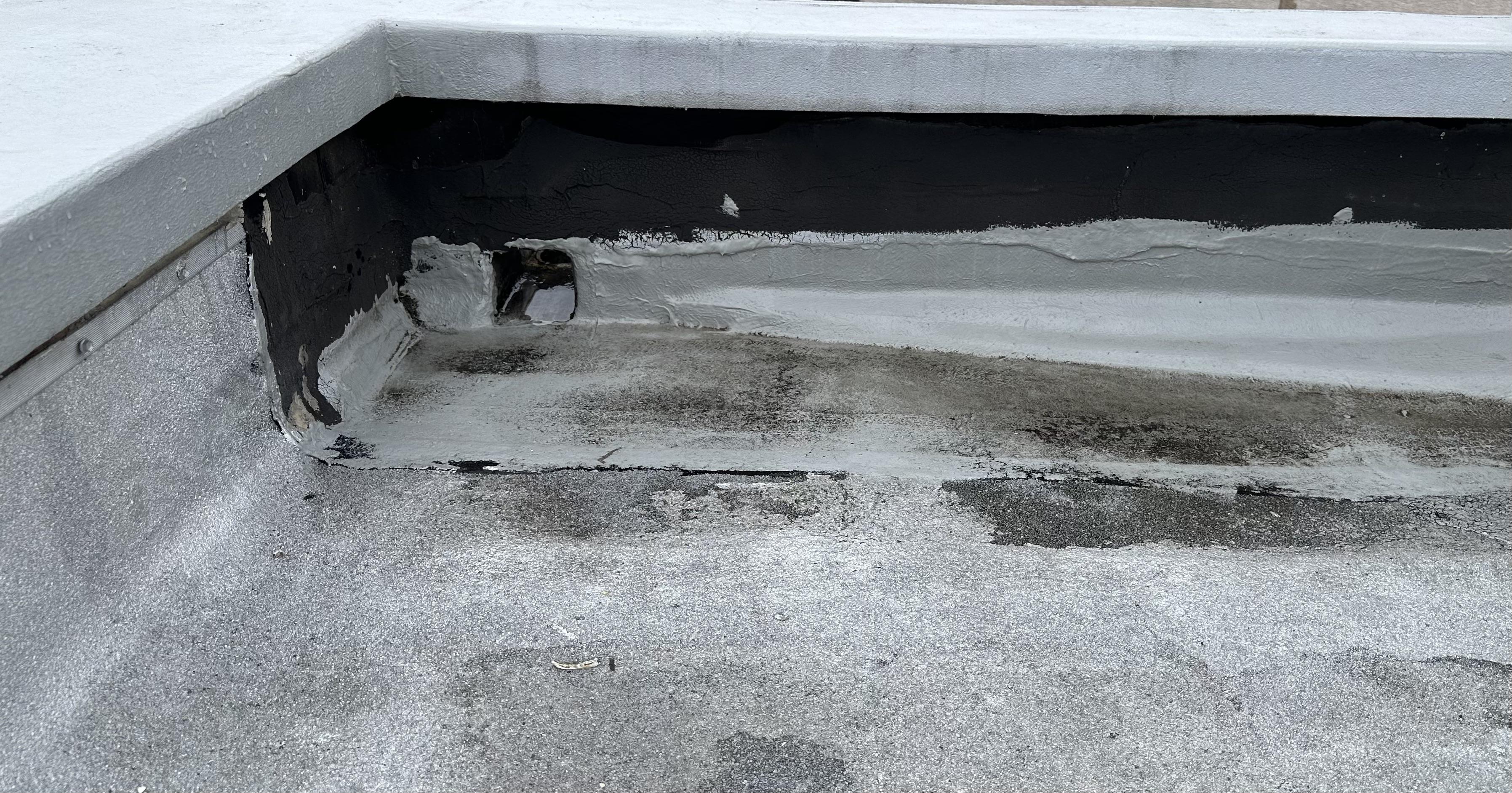
Freeze-thaw cycling is the more common damage pattern: water gets into a lap seam, a flashing detail, or a small existing gap, freezes, expands, and widens the opening, then thaws and lets more water in on the next cycle. A membrane or flashing detail that looked marginal before the ice event can fail outright afterward, even without any single dramatic moment of visible damage. That is why we document seam and flashing condition specifically after a cold event, beyond only the obvious splits or tears.
Distinguishing ice-event damage from ordinary Portland dampness matters for the same reason it matters on a wind claim: gradual moisture exposure and moss growth from the region's long damp season is a maintenance condition, while a seam or flashing failure that traces to a specific freeze-thaw cycle during a documented cold event is what a claim covers. We note temperature history and the specific storm dates alongside our field findings so that distinction is clear in the file. We're your roofing contractor, not a public adjuster , we document and substantiate the roof damage so you and your adjuster work from an accurate scope.
Because ice events are rare here, we also check that drains, scuppers, and overflow paths were clear and functional before the freeze, since a drain that was already partially blocked will fail faster under ice and complicates the claim by mixing in a pre-existing maintenance issue. Where that is the case, we document it separately from the storm damage so the two are not conflated in the adjuster's review.
If your roof came through a recent ice storm with leaks, sagging, or damaged flashing, get us the building address and the approximate date of the cold event. We will inspect the roof, check the deck and drainage along with the membrane, and put together documentation that reflects what the ice actually did.