Portland sits at the confluence of the Columbia and Willamette rivers, and that geography has made it one of the West Coast's most important industrial hubs for more than a century. The Port of Portland handles grain exports, automobile imports, and container cargo along the Columbia River. Portland International Airport's cargo operations serve Pacific Rim trade routes. Intel's Hillsboro campus, the largest employer of Intel workers anywhere in the world, anchors the technology manufacturing sector of the metropolitan area. And the industrial districts of Swan Island, Rivergate, and the Columbia Corridor house a dense concentration of manufacturing, warehousing, and logistics operations that depend on durable, reliable roofing above their operations.
The Port of Portland's marine terminals along the Columbia River represent some of the most industrially demanding roofing environments in the Pacific Northwest. Port facilities are exposed to the Columbia River's maritime-influenced air, the constant presence of heavy industrial equipment, and the demanding operational schedules of an active cargo port. Grain terminal facilities, auto processing warehouses, and container handling structures all have specific roofing requirements. The Columbia River Gorge creates a wind channel that funnels east winds of exceptional velocity through Portland, roofing systems at port and river-adjacent facilities must be engineered to withstand Gorge wind events that can far exceed standard design assumptions.
Intel's Hillsboro campus, spanning thousands of acres and multiple semiconductor fabrication buildings, is one of the most technically demanding industrial roofing environments on the West Coast. Intel's Oregon fabs are the company's most advanced manufacturing sites and operate continuously with the precision environmental control requirements of leading-edge chip fabrication. Roofing above and around these facilities requires absolute waterproofing integrity, compatibility with chemical exhaust systems, and the ability to support extremely heavy rooftop mechanical equipment loads associated with cleanroom HVAC systems. We have experience working in semiconductor manufacturing environments and understand the documentation, safety, and environmental control requirements these facilities impose.
Portland's rainfall pattern creates roofing challenges that differ from most of the country. The 43 inches of annual rainfall arrive almost entirely between October and April, Portland summers are famously dry, often with no meaningful rain for three to four consecutive months. This pattern creates a seasonal membrane stress cycle: membranes expand in summer heat and UV exposure, then contract dramatically when fall rain and cooler temperatures arrive. Seams and flashings that were under-specified may open during this seasonal transition, allowing the first fall rains to infiltrate an assembly that was dry all summer. Pre-fall inspection and seam maintenance is an important part of Portland industrial roof management.
Seismic risk is a fundamental engineering consideration for industrial roofing in Portland. The Cascadia Subduction Zone poses a significant long-term seismic hazard, and Portland's local fault systems add to the risk profile. The Oregon Building Codes Authority has adopted seismic design requirements that apply to commercial roofing systems, particularly requirements around expansion joint treatment, drainage system flexibility, and the avoidance of rigid connections between independently moving building elements. For large industrial facilities, we review our roofing details with the project structural engineer to confirm compatibility with the building's seismic design assumptions.
Swan Island is Portland's most concentrated industrial district, a 1,700-acre island-shaped peninsula on the Willamette River that houses metals recycling, auto auction, industrial distribution, and a dense mix of manufacturing operations. The Swan Island industrial community faces direct Willamette River moisture exposure and the elevated humidity that characterizes the Portland metro for most of the year. Biological growth on roofing surfaces is more aggressive here than in drier climates, and drainage design must account for the debris loads generated by Portland's deciduous urban tree canopy. Leaf and organic debris accumulation in roof drainage systems is a significant maintenance concern for Portland facilities with interior drains.
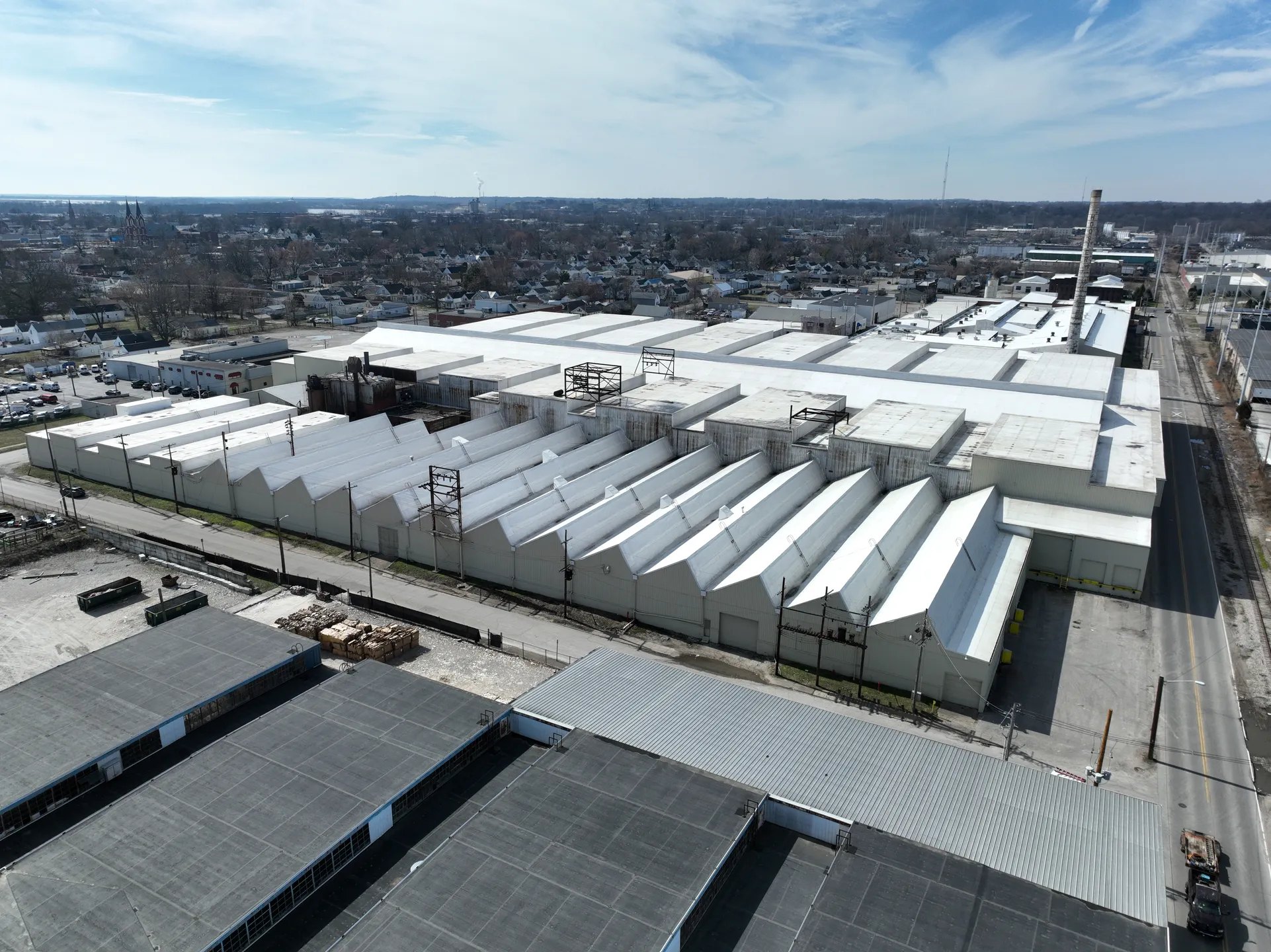
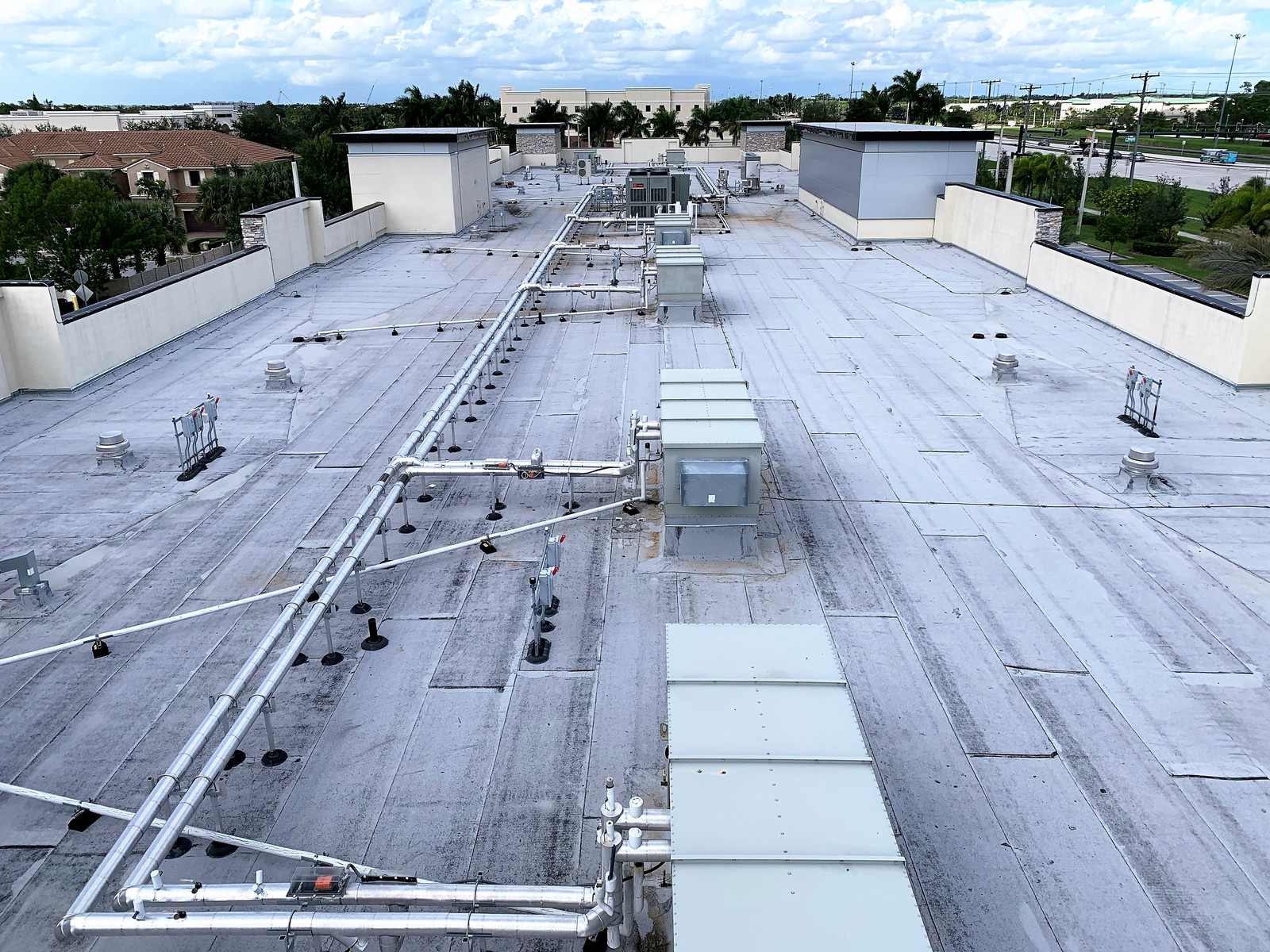
The Rivergate Industrial District on the Columbia River near the Port of Portland terminal represents another concentration of large industrial facilities, petroleum storage and distribution, bulk material handling, container freight stations, and warehousing operations. Facilities in this district often have large, flat roof fields with complex penetration arrays and drainage systems that must handle significant volumes of Pacific Northwest rainfall efficiently. We design drainage for Portland facilities to handle the seasonal intensity of fall and winter precipitation, recognizing that a long summer without rain can leave drain hardware clogged with debris just as the rainy season begins.
Portland's mild winters, hard freezes are unusual, and the city rarely sees prolonged cold snaps, mean that freeze-thaw stress is less of a roofing concern here than in colder climates. The primary weathering stresses on Portland industrial roofs are UV during the dry season, biological growth from the humid marine climate, and the seasonal membrane movement caused by the dramatic contrast between dry summer heat and wet fall conditions. These factors favor fully adhered membrane systems with high-quality seam adhesives over mechanically attached systems with potential seam movement issues, and we specify fully adhered installations for most Portland industrial applications where substrate conditions allow.