When water gets past the roof of a Portland warehouse, somebody mops it up. When water gets past the roof over an active processing line, the plant's quality team may have to place product on hold, document an environmental event, and answer for it to a regulator. That single fact reorders everything about how food processing roofing has to be planned. The goal is not to respond quickly to a leak, it is to design and sequence the work so a leak over the production floor never happens in the first place. We treat food and beverage plant roofs as part of the facility's food-safety system, because that is exactly what they are.
Portland is a dense food-production town, and the work clusters in a few places. The Central Eastside has long been home to bakeries, coffee roasters, and specialty food makers in older tilt-wall and brick-and-timber buildings. The Northwest Industrial District along Front Avenue and out toward Rivergate carries cold-storage operations, seafood and protein processors, and beverage producers. Swan Island and the Columbia Corridor add more refrigerated distribution and processing under large low-slope roofs. And the region's brewing and cider industry runs humid, washdown-heavy production rooms that put the same demands on a roof that a food plant does. Every one of those buildings runs wet inside and sits under a long, wet sky outside.
The membrane specification on a food plant does not start with performance, it starts with what the facility's food-safety plan and its USDA or FDA framework will accept above a production or food-contact zone. Not all commercial materials qualify. White TPO and PVC single-plies are generally acceptable over enclosed processing areas, but the specific formulation has to be confirmed, and the supporting products get the same scrutiny:
We confirm material acceptability with the plant's QA team before we specify anything that goes over a food-contact area. That review is part of the job, not a box checked after the fact.
Food plants are washed down constantly. Production rooms run at high interior humidity, and that warm, wet air drives moisture up into the roof assembly around the clock. In Portland's cool, damp climate the deck stays cold enough that the dew point can land inside the assembly, where condensation soaks the insulation and corrodes the steel deck from behind, a failure that produces no surface leak until the damage is already done. We design these roofs with a vapor retarder sized to the interior humidity load and detail the insulation so the dew point never reaches the deck. On a washdown plant, vapor control is not optional; it is the part that determines how long the roof lasts.
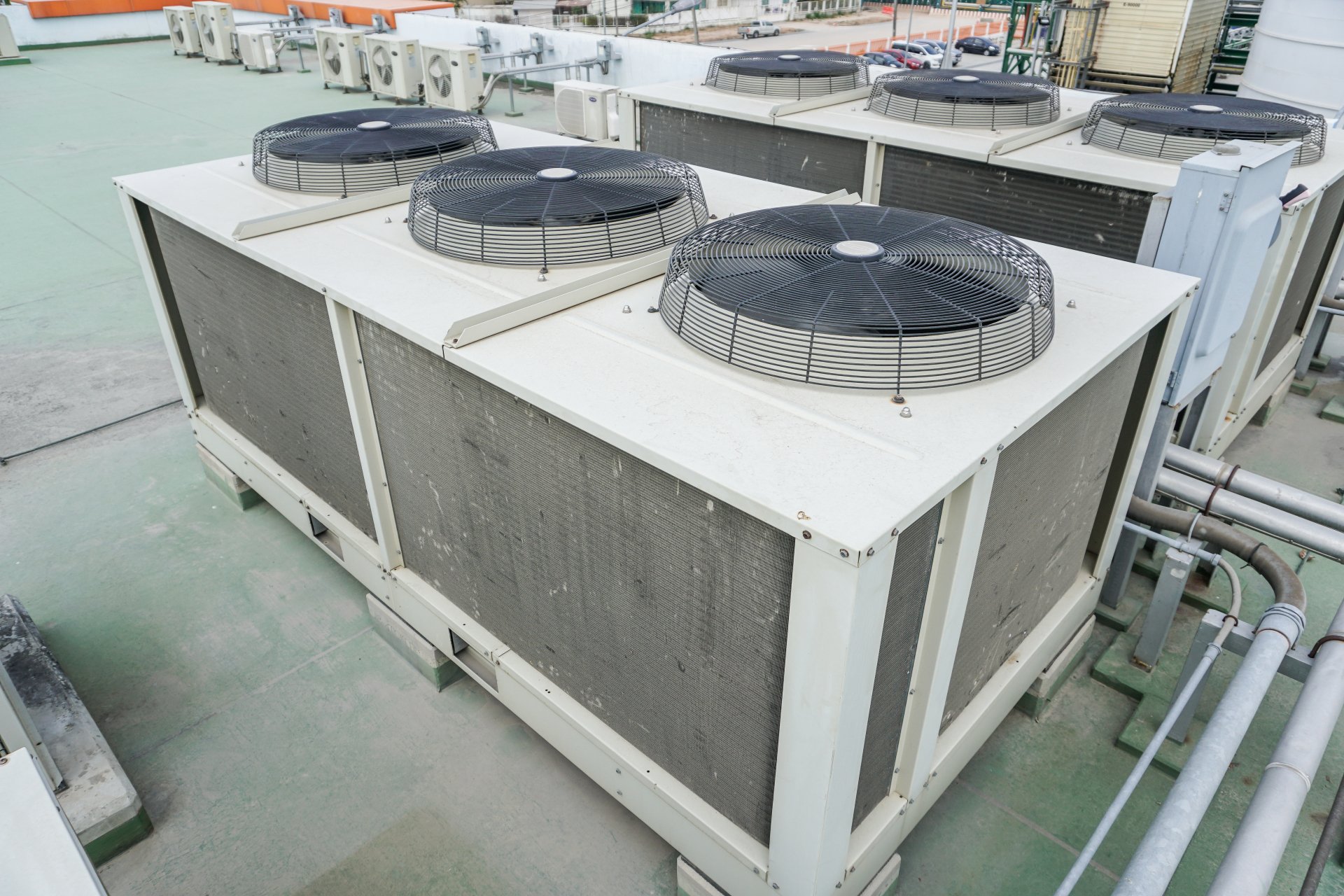
Freezer rooms, blast-freeze cells, and chill spaces add two things to a roof: weight and a thermal gradient that has to be respected. The rooftop condensing units, evaporative equipment, and refrigerant lines serving those spaces concentrate live and dead loads that we confirm against deck capacity before adding insulation. Just as important, the roof assembly over refrigerated space has to maintain thermal continuity so the building's vapor drive doesn't reverse and condense inside the assembly. Tapered insulation over freezer and chill rooms is designed around the actual operating temperatures and the local climate's vapor-drive direction. Ponding water over a freezer is worse than ponding elsewhere, it adds thermal load to the refrigeration system and accelerates deck corrosion, so positive drainage to scuppers and drains is part of the design, not an afterthought.
Many Portland plants run two or three shifts with a single weekly sanitation window as the only time the production floor is quiet. Any work that opens the envelope above an active line has to live inside that window, with the production team and QA confirming the floor is clean and protected before we start and reprotected before they restart. We phase the project around the production calendar, staging tear-off and dry-in so every section over a line is watertight before the next shift, rather than asking the plant to bend its schedule to ours.
No. USDA- and FDA-regulated plants require membranes, adhesives, primers, and sealants to be confirmed acceptable for use above food-production areas, and that varies by product. We identify your regulatory framework and confirm material acceptability with your QA team before specifying anything over a food-contact zone.