A gym roof works harder than its square footage suggests, and the reason is mostly invisible from the parking lot. Hundreds of people moving through an open training floor, showers and locker rooms running all day, and in many facilities a pool, a steam room, or a hot tub area, all pump moisture into the building. That humidity rises and pushes against the underside of the roof, and a membrane that is flawless on top will still let condensation collect inside the assembly if the vapor control is wrong. We design fitness-center roofs around that interior moisture load from the start, because in Portland's climate it is the failure mode that actually shows up. The gyms we work on are spread across the city and the suburbs, from big-box clubs along the I- 217 retail corridors to boutique studios and CrossFit boxes in converted industrial space in the Central Eastside and along Sandy Boulevard.
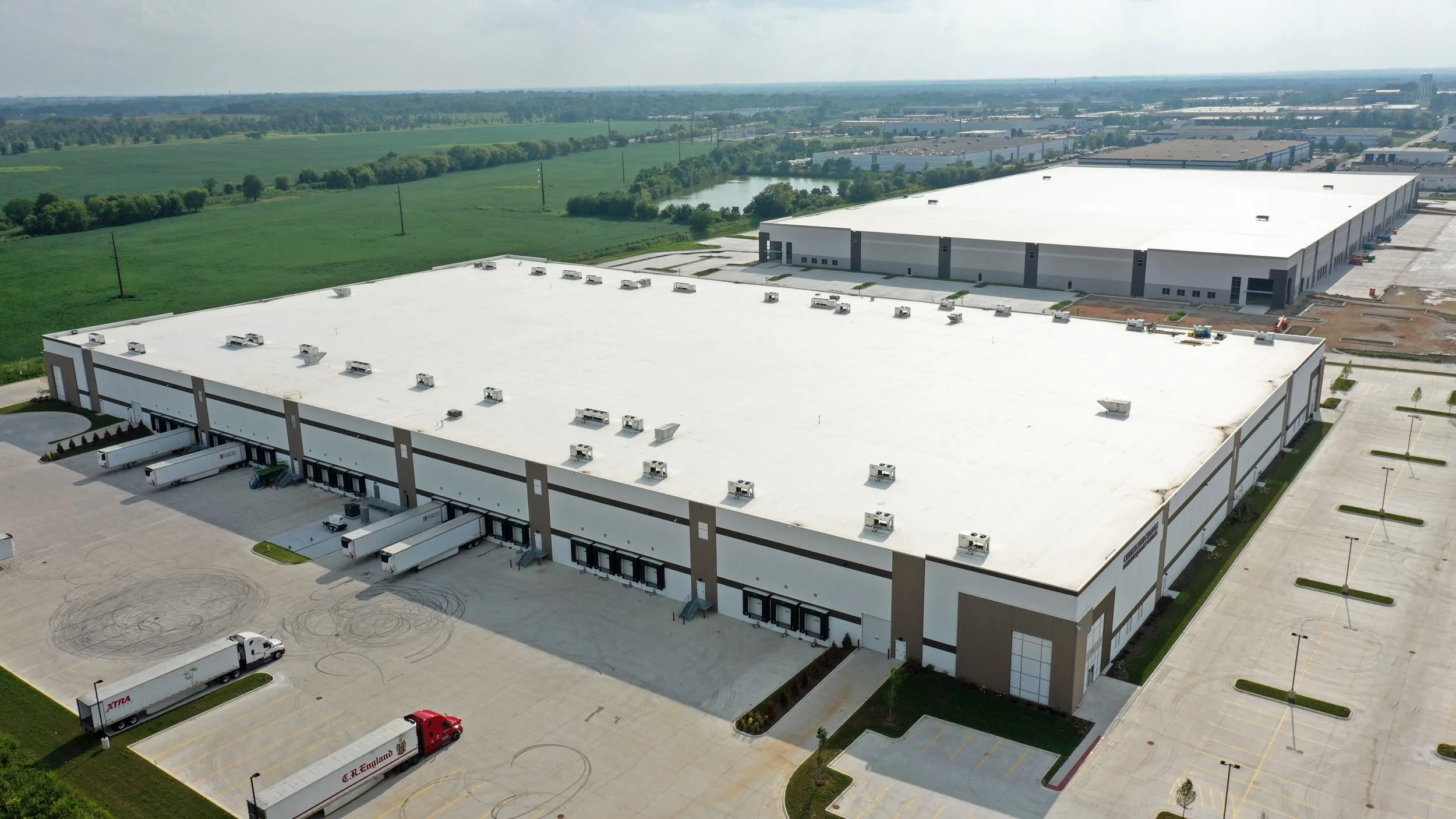
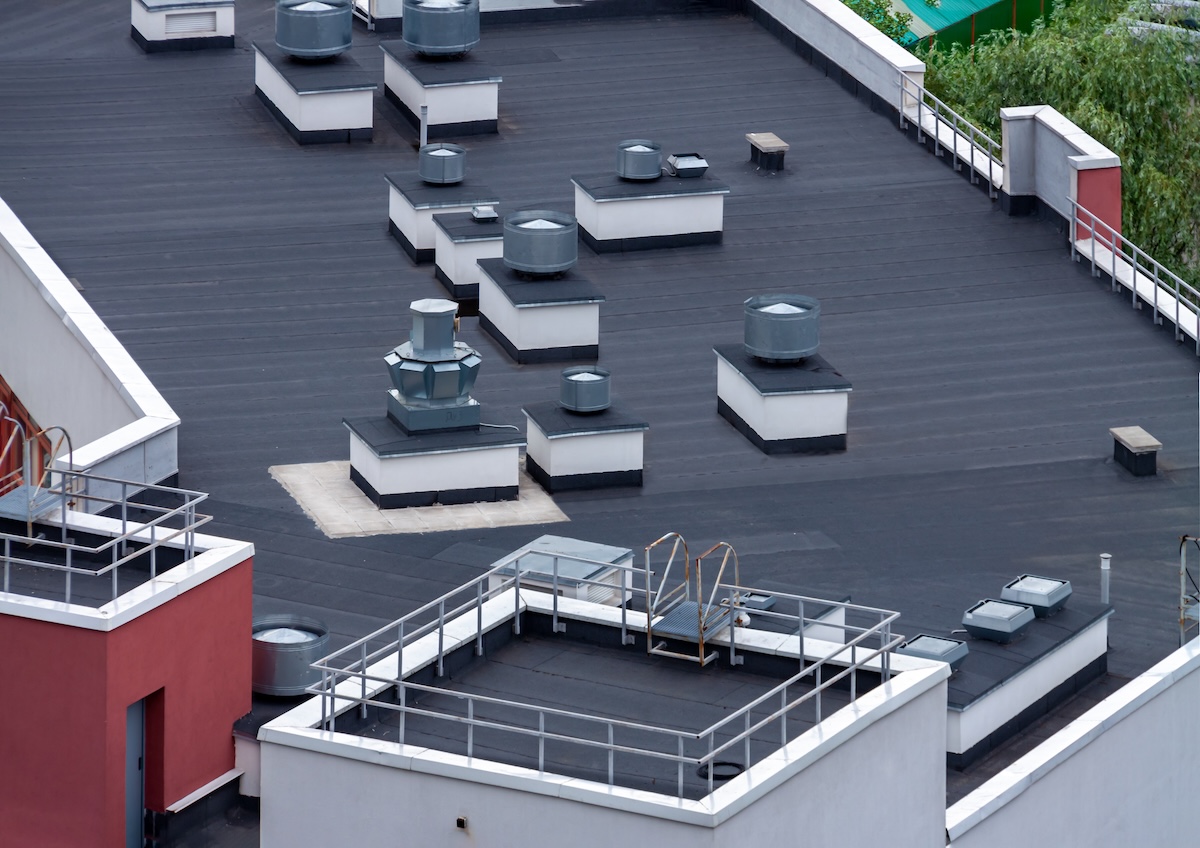
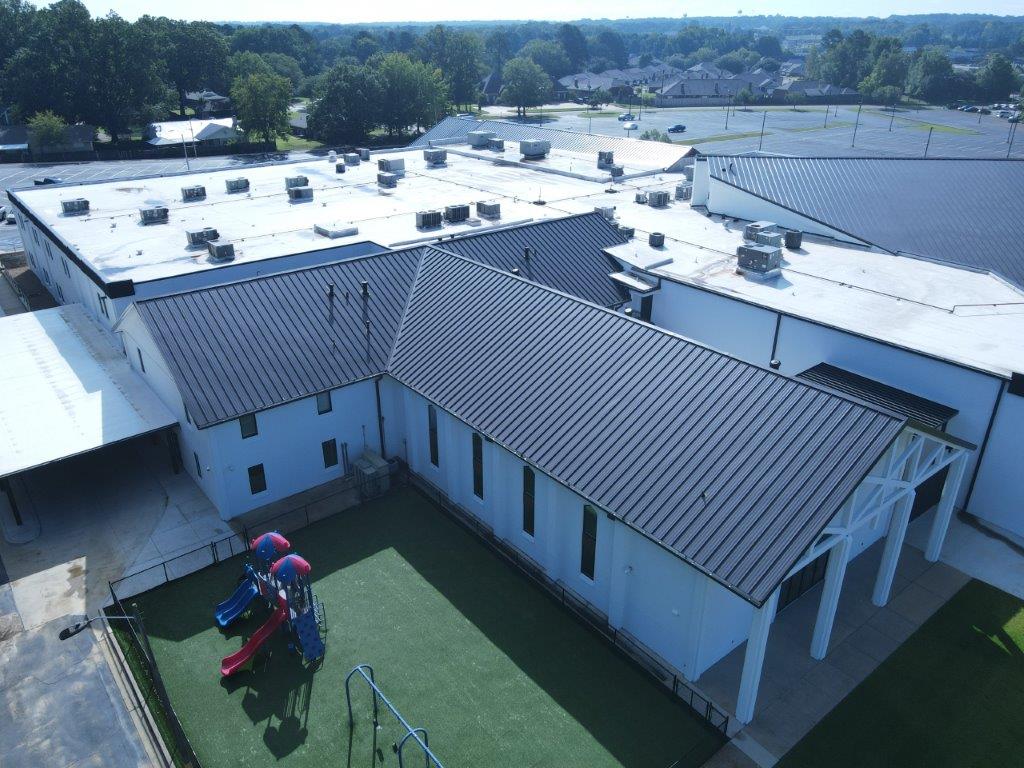
The other thing you notice on a gym roof is how crowded it is. A wide, open exercise floor needs high-volume air handling to keep up with the carbon dioxide and moisture that a packed class throws off, and the locker rooms, group-fitness rooms, and any pool enclosure each carry their own dedicated exhaust and supply units. The result is a penetration count two to three times what you would find on a retail or office building of the same footprint, and every one of those curbs and pipes is a place water can get in if the flashing is generic. We document each penetration before pricing the job and detail them for the humidity these buildings generate, not with off-the-shelf details meant for a dry warehouse.
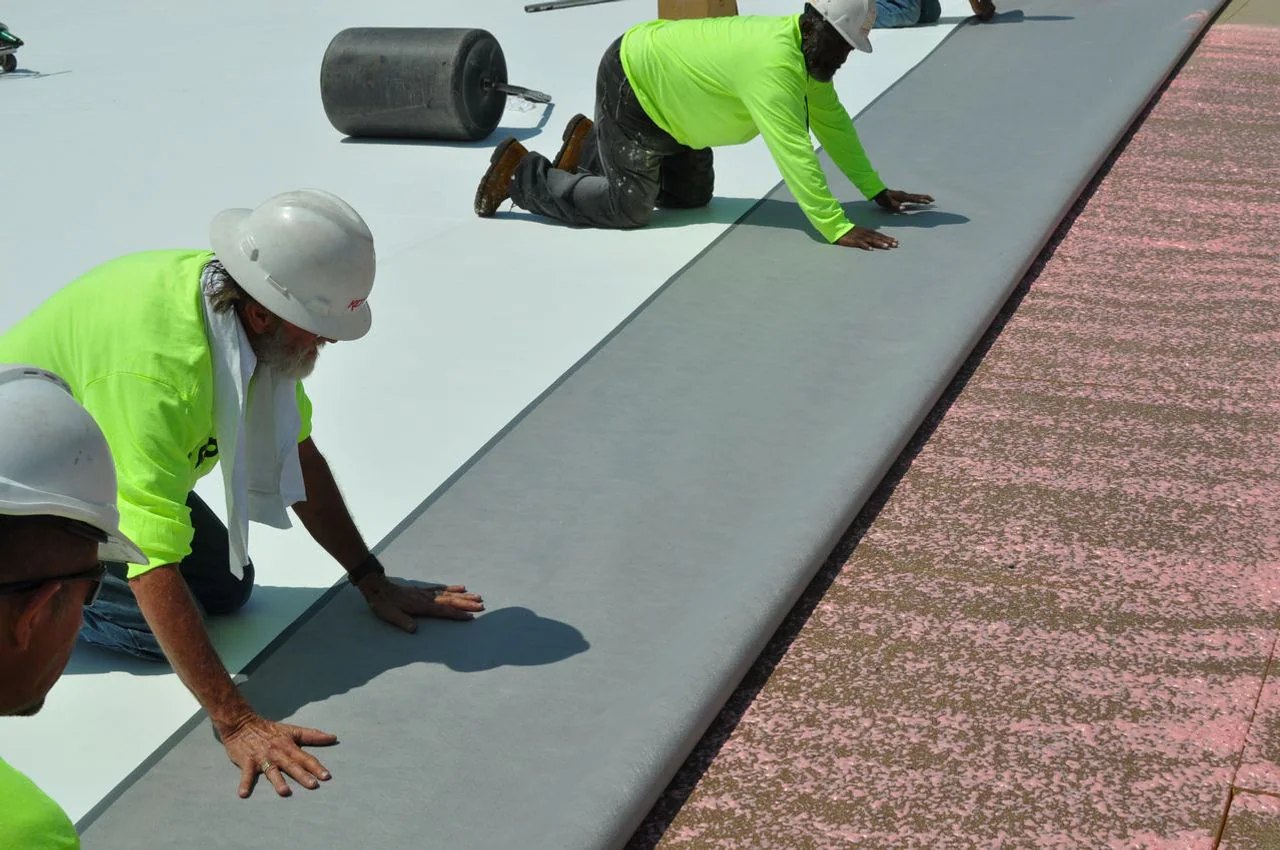
The single most important decision on a fitness-center reroof is where the vapor retarder sits in the assembly. Get it right and the insulation stays dry and keeps its R-value for the life of the roof. Get it wrong and warm, wet interior air condenses inside the buildup, soaks the boards, and quietly destroys the insulation within a few seasons while the membrane above still looks fine. Portland sits in a marine climate zone, and the correct vapor strategy here is not the same one a contractor would use in a dry inland market. We review the existing assembly, confirm whether the vapor retarder position is appropriate for this climate, and specify accordingly. For clubs with pools, steam rooms, or hot tubs we lean toward a fully adhered 60-mil TPO or PVC, which removes the fastener penetration field of a mechanically attached system and gives a more vapor-resistant assembly. For dry facilities without high-humidity rooms, mechanically attached 60-mil TPO is appropriate and more economical.
Most fitness centers open before dawn and close late, and a fair number never close at all. That reshapes how the work runs. We coordinate the schedule with the facility's management before we mobilize, keep tear-off and dry-in inside agreed daily windows, and hold crew start times and noise limits near occupied locker rooms to what the building can tolerate while members are present. The gym manager gets a daily status so they can confirm the roof is watertight before the next operating cycle. For clubs with pools we also coordinate with the operations team on any exhaust or HVAC penetration work that could briefly affect air exchange or the health-department-required ventilation over the pool hall.
That watertight discipline is not a formality in this city. Portland's wet season runs the better part of the year, and the slow, persistent rain that defines it will find an open lap or an exposed deck overnight without fail. We do not leave a gym roof open to weather, which matters double over a building full of expensive cardio equipment and a hardwood group-fitness floor.
Curb flashing is standard scope on any gym we touch, not an extra. We measure every curb height and clearance before the project is priced, and undersized curbs, which are a common defect on older fitness buildings, get raised or replaced so the new membrane meets the manufacturer's warranty requirement for curb height. We also check that the drainage actually keeps up with Portland rainfall, because a roof carrying this much rooftop equipment often has drains crowded by curbs and pipe stands, and ponding around a poorly placed unit is a recurring source of premature failure.
National operators run their roofing through corporate facilities teams and vendor-approval processes, and independent club owners and the real-estate building owners who own the buildings handle it directly. We work either path. What does not change is the closeout package: permit and final inspection, manufacturer warranty registered to the right party, a roof zone diagram with the penetration inventory, drain and flashing inspection records, and photo documentation of the completed details, formatted to match a corporate facilities system when one is required.
By placing the vapor retarder correctly for Portland's marine climate zone and choosing a more vapor-resistant assembly where it is warranted. We review the existing buildup first, because recovering over a wet or misspecified assembly traps the moisture instead of fixing it.